

When Sara Schenck first heard the word “hospice,” she was terrified.
Like many families, she associated hospice with final moments, heartbreak, and saying goodbye. What she and her family discovered instead was something far different: support, guidance, compassion, and a team that walked beside them through one of life’s most difficult journeys.
For nearly 11 months, Sara’s husband, Brad, was cared for by HIA Hospice as he battled brain cancer — first at home, later at HIA Heather’s House, and ultimately surrounded by the people he loved most. Their story is one of resilience, humor, deep family bonds, and the extraordinary impact hospice care can have on an entire family.
A Diagnosis That Changed Everything
Brad was diagnosed with brain cancer in 2016 after what initially seemed like symptoms related to a concussion during military training. A brain scan revealed a lemon-sized tumor, and he was quickly transported to the University of Minnesota for treatment.
Despite the devastating diagnosis, Brad approached life with determination and humor.
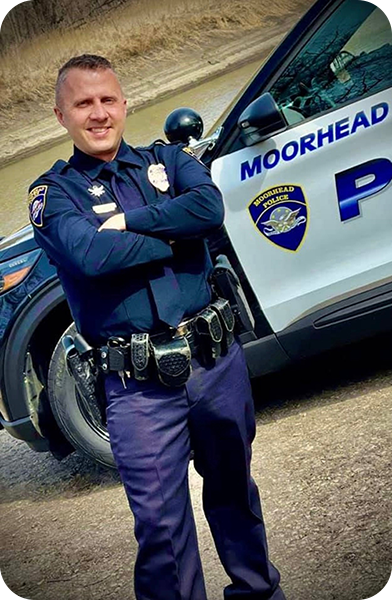
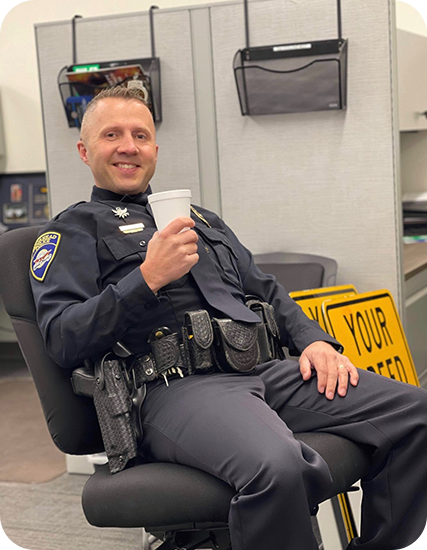
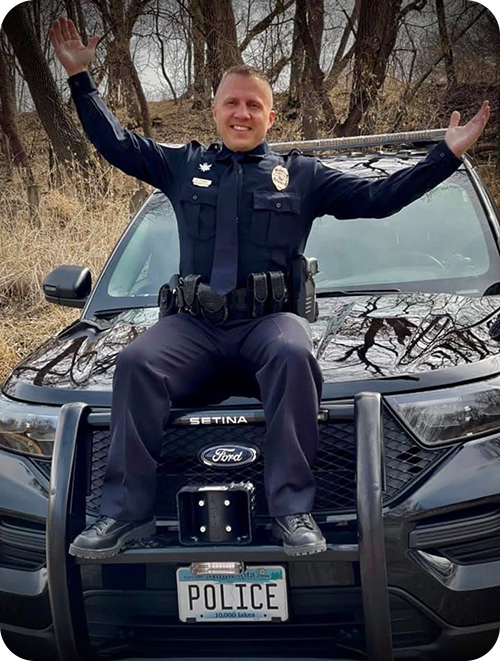
He underwent brain surgery so doctors could preserve his ability to speak and retain memory function. Following surgery, he endured radiation and chemotherapy, treatments that successfully controlled the tumor for six years. During that time, Brad returned to work as a police officer, continued serving his community, and remained deeply committed to his family.
Sara recalls that even during the ambulance ride after learning about the tumor, Brad joked with paramedics by quoting the movie Kindergarten Cop: “It’s not a tumor.” Humor became one of the family’s ways of coping through uncertainty.
A Life Dedicated to Service and Family
Brad was more than his illness.
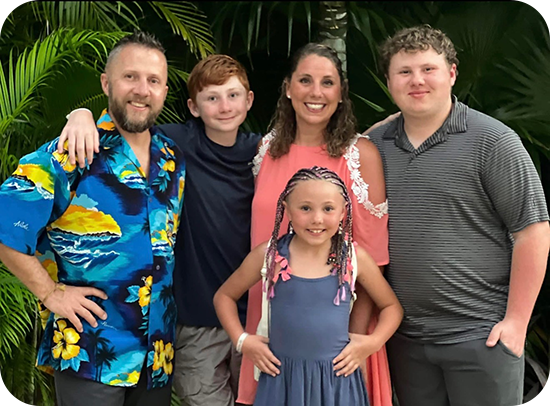
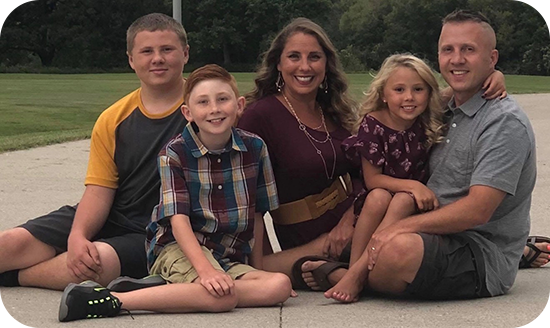
He served both in law enforcement and the military, including time on the Red River SWAT team. But outside of work, he was a devoted husband and father who loved family trips, time at the lake, and making memories with his three children.
As the cancer progressed and seizures began returning years later, the family faced the difficult reality that treatment options were running out. In January, the VA connected them with HIA Hospice.
At first, Sara admits, the idea was overwhelming.
“We were very nervous about it,” she shared. “When people say hospice, it’s a scary thing to hear and think.”
But what followed changed their understanding of hospice entirely.
Hospice Became Part of the Family
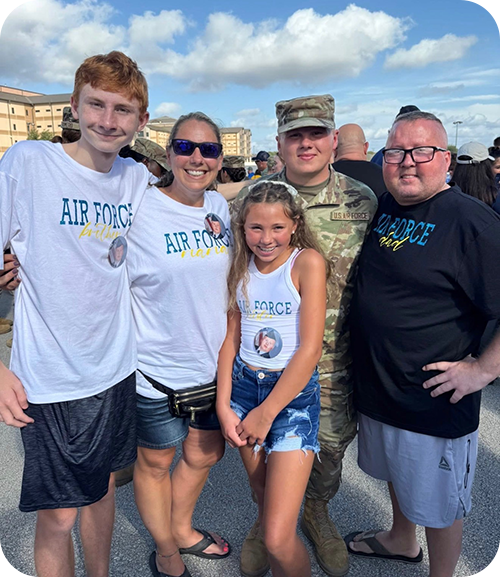
HIA Hospice staff began visiting the Schenck family at home every week. Nurses monitored Brad’s care and comfort, while social workers provided emotional support for Sara and their children.
Over time, those visits became far more than medical check-ins.
“The nurses were amazing,” Sara said. “They built relationships with not only Brad, but myself and our kids. It wasn’t just, ‘I’m here to do my job and leave.’ It was very personal.”
The hospice team adapted care around the family’s needs. When Brad could no longer safely be left alone, staff coordinated visits so Sara could meet privately with the social worker while the nurse stayed with Brad.
For Sara, one of the biggest surprises was the emotional connection hospice staff created.
“It was way more than that,” she said. “They were there to support both of us as well as our three kids.”
A Final Chapter at Heather’s House
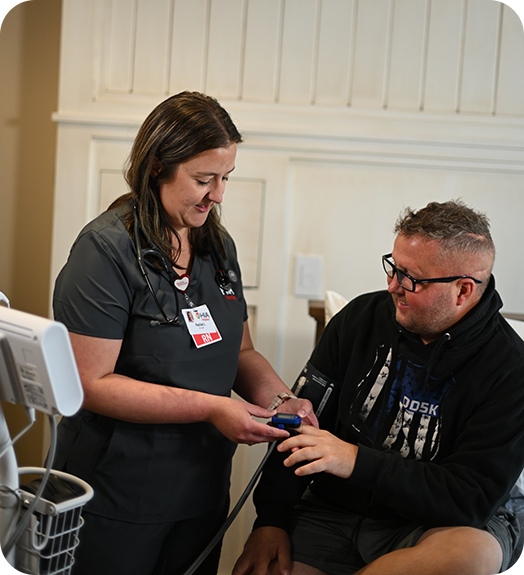
In November, after Brad suffered a serious fall, the family transitioned temporarily to HIA Heather’s House.
Sara remembers how quickly and smoothly the hospice team responded, arranging transportation and preparing everything needed to make Brad comfortable.
At HIA Heather’s House, the family found something unexpected: peace.
Instead of the sterile, chaotic atmosphere often associated with hospitals, they found warmth, quiet, and space to simply be together. Their children spent time in the game room. Family meals continued in a shared kitchen space so Brad would never have to eat alone. Their room overlooked a peaceful pond where loved ones could gather, reflect, and support one another.
“We still had dinner together,” Sara said. “It felt personal.”
HIA Heather’s House also helped Brad accept the increasing care he needed. Independent by nature, he struggled with needing assistance. But the staff’s kindness and compassion helped him understand that accepting help was okay.
Returning Home
After several days at HIA Heather House, Brad returned home where hospice staff had already prepared a hospital bed and coordinated ongoing care.
The HIA Hospice team remained closely involved, helping the family understand what to expect in the coming days and supporting everyone emotionally — not just Brad, but the children, extended family, and Sara herself.
“They helped us navigate everything,” Sara said. “If they didn’t know the answer, they would find out.”
Leaving a Legacy
Even during his illness, Brad continued thinking about his children and the memories he wanted to leave behind.
Without telling Sara, he began writing a book titled No Easy Way Out, documenting his life, experiences, and journey through illness. His goal was simple: to make sure his children would always know who he was and what he had accomplished.
In true Brad fashion, he surprised Sara by publishing the book on Amazon before ever telling her it was complete.
“That was how he always was with life,” Sara said. “Constantly surprising everybody.”
Hospice Support Doesn’t End After Loss
Even after Brad’s passing, the support from HIA Hospice continued.
Nurses and social workers still check in regularly with Sara and the children. They offer grief support resources, classes, and even simple gestures — like stopping by with coffee — that remind the family they are not alone.
For Sara’s children, those continued visits have become meaningful connections.
“They laugh about it,” she said. “‘We got a new friend now.’”
Redefining What Hospice Means
Sara now shares her experience openly with others who may fear hospice care the same way she once did.
“Yes, it’s scary,” she said. “But it doesn’t have to be short-term. They’re there to help not only your loved one, but also yourself and your kids and your entire family.”
For the Schenck family, hospice was not simply about end-of-life care. It was about preserving dignity, creating memories, supporting a family, and making an impossible season a little less overwhelming.
And that, Sara says, is why supporting organizations like HIA Hospice matters so deeply.
“They do so much for the community and everybody around.”